





A well-planned wardrobe isn’t just about extra storage, it’s about making your morning routine feel completely effortless. By designing your wardrobe layout around what you actually wear and how you store it, you can create a space that works seamlessly with your daily life
Getting dressed in the morning should feel like shopping in your own private, high-end boutique, not like an archaeological dig! If you’re tired of rummaging through piles to find your favorite silk shirt, it’s time to upgrade.
Let’s talk about planning premium wardrobe designs tailored specifically to your lifestyle.
Why Your Daily Routine Should Influence Wardrobe Design?
• The Limitations of One-Size-Fits-All Wardrobes
Standard closets are like one-size-fits-all t-shirts: they don’t really fit anyone perfectly. To truly elevate your space, you need a custom room wardrobe design that bends to your will and matches your flow, rather than forcing you to adapt to awkward shelves.
• How Daily Habits Affect Storage Needs
Are you a hit-the-gym-at-5-AM person or a snooze-until-8-AM corporate warrior? A bespoke wardrobes design anticipates your moves, keeping your go-to gear right at eye level for a frictionless morning.
• Balancing Accessibility and Organization
You want your gorgeous, expensive pieces displayed beautifully, but your messy gym socks completely hidden. It’s the ultimate balancing act of luxury aesthetics and practical concealment.
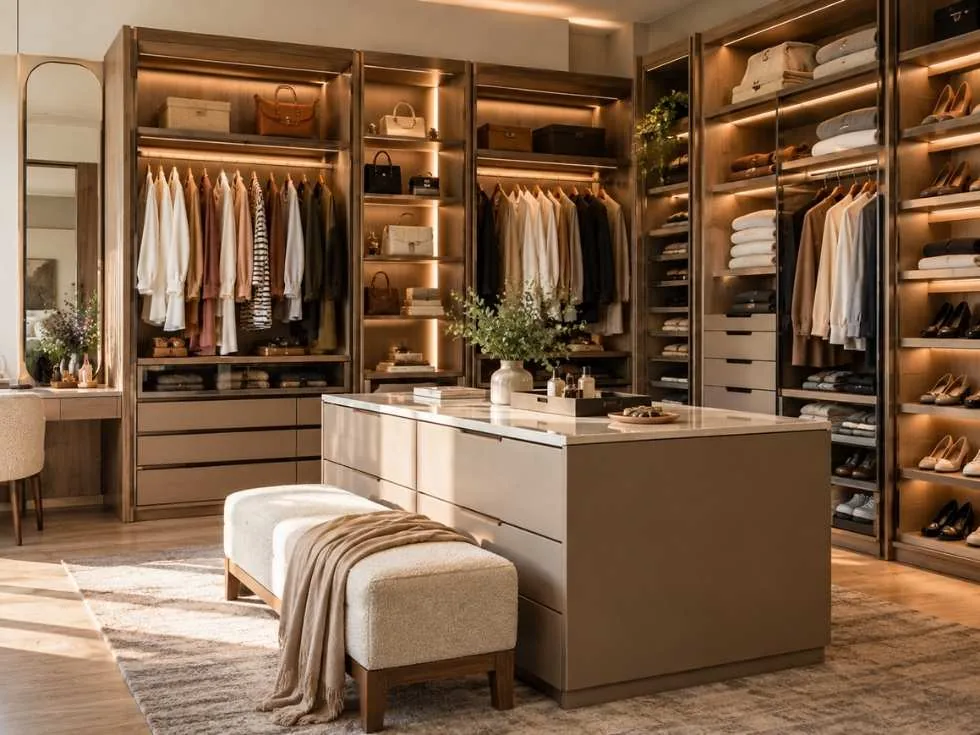
• Benefits of a Lifestyle-Based Wardrobe Layout
When your closet matches your routine, the benefits are endless: less stress, zero morning panic, and a space that stays immaculate with barely any effort on your part.
Understanding Your Storage Habits Before Planning a Wardrobe
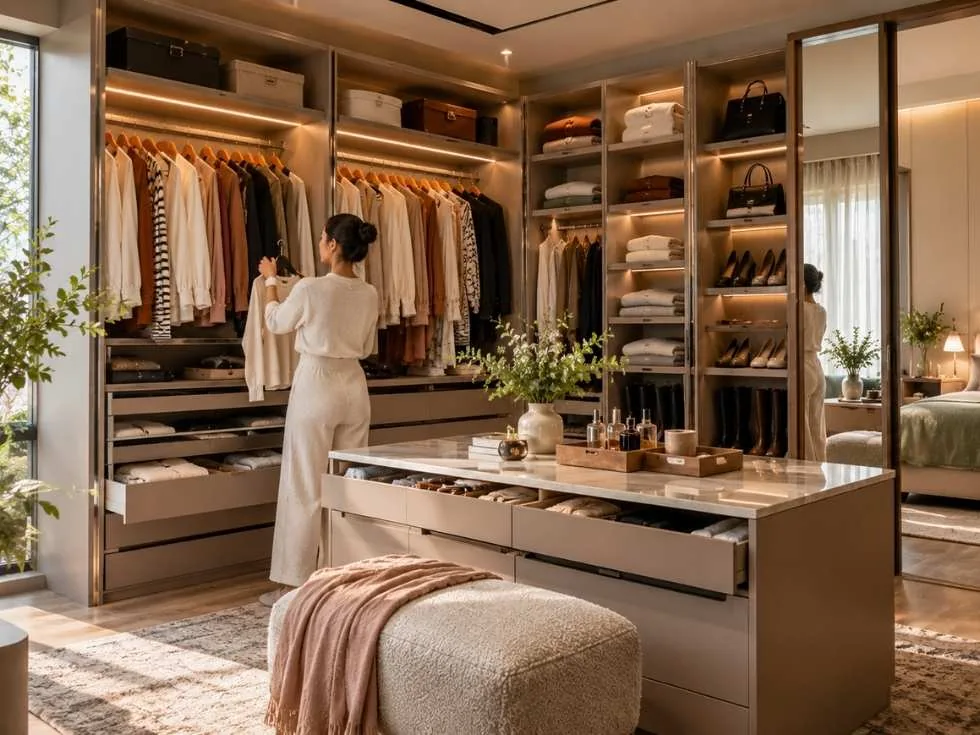
• Assessing Your Clothing Collection
Before knocking down walls for a brand-new bedroom wardrobe design, you need to take inventory. Count your dresses, suits, chunky knits, and yes, even those comfy sweatpants.
• Identifying Frequently Used Items
What do you reach for 80% of the time? Those VIP items get prime real estate in the center of your closet.
• Understanding Seasonal Storage Requirements
Winter coats shouldn’t be hogging premium space in the middle of July! Planning top-shelf or under-bed storage for off-season items is an absolute game-changer.
• Tracking Everyday Dressing Routines
Do you put on clothes first or pick your shoes and build up? If you lean towards a classic aesthetic, a beautifully crafted almirah design with a built-in full-length mirror might match your dressing flow perfectly.
Types of Clothing and Accessories to Plan For
• Formal Wear Storage Needs
Tall, uninterrupted hanging spaces are non-negotiable for gowns, long coats, and suits to prevent annoying creasing.
• Casual and Everyday Clothing
Do you prefer folded stacks of denim or hanging your t-shirts? An intelligent cupboard design handles both flawlessly with adjustable shelving and shorter hanging rods.
• Ethnic and Occasion Wear Storage
Heavy lehengas, delicate silk sarees, and embellished sherwanis need dedicated, breathable protection away from daily wear-and-tear.
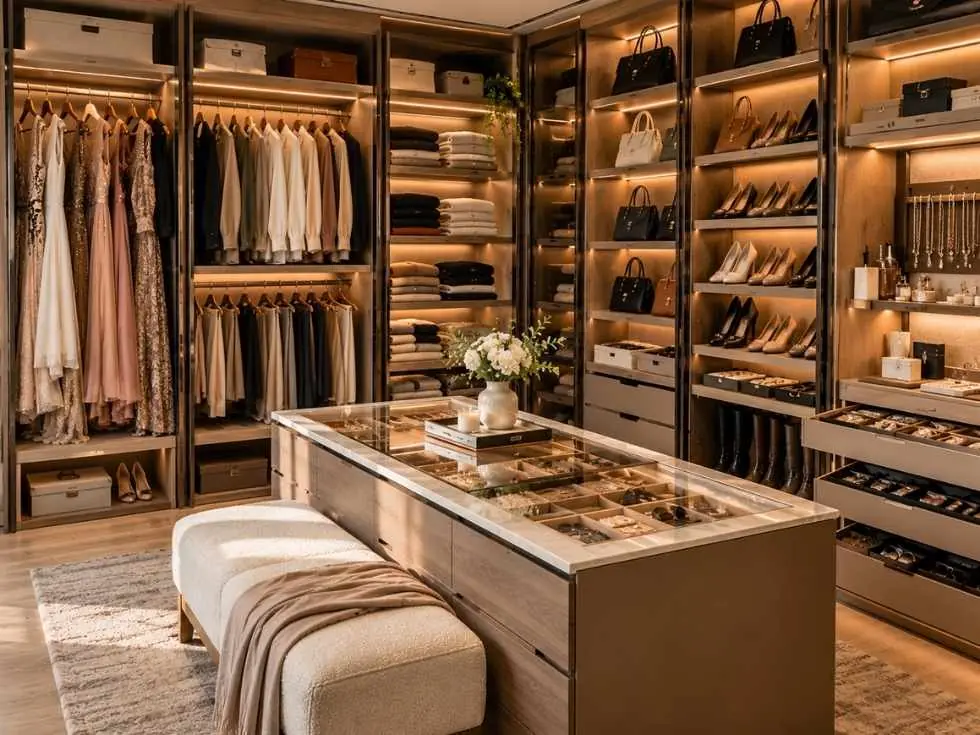
• Footwear and Handbags
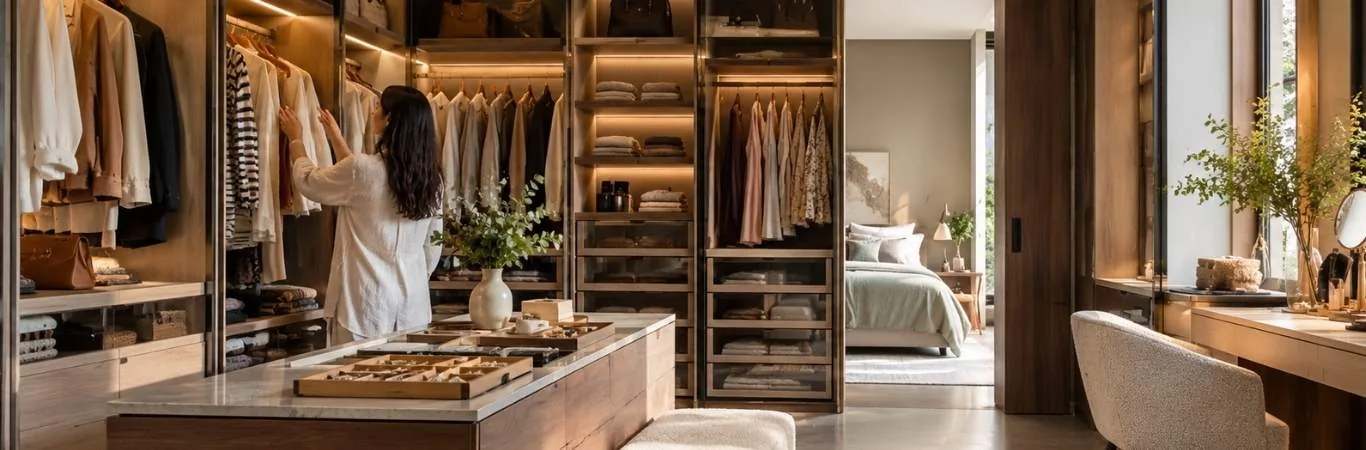
Treat your accessories like art! Slanted racks for shoes and dust-bag-friendly, spacious cubbies for handbags are a must.
• Accessories, Watches and Jewellery
Say goodbye to tangled necklaces. Opt for velvet-lined, shallow pull-out drawers with acrylic dividers.
Creating Dedicated Storage Zones Within a Wardrobe
Zoning is the absolute secret sauce to a functional, modern wardrobe design. Here is how you should map out your luxurious new room wardrobe design:
Storage Zone | Location in Closet | What Goes Inside |
Daily Essentials | Eye and waist level (Prime Real Estate) | Everyday workwear, favorite jeans, current season staples. |
Workwear/Formal | Side tall-hang sections | Suits, blazers, evening dresses. |
Seasonal | Highest shelves or deepest drawers | Winter puffers, summer beachwear. |
Accessories | Waist-level slide-out drawers | Belts, ties, watches, sunglasses. |
Footwear | Bottom racks or slanted shelves | Sneakers, heels, boots, loafers. |
• Daily Essentials Zone
Keep this right in the middle. Grab, go, and look fabulous.
• Workwear and Formal Clothing Zone
Keep it crisp, ironed, and completely separate from your casuals.
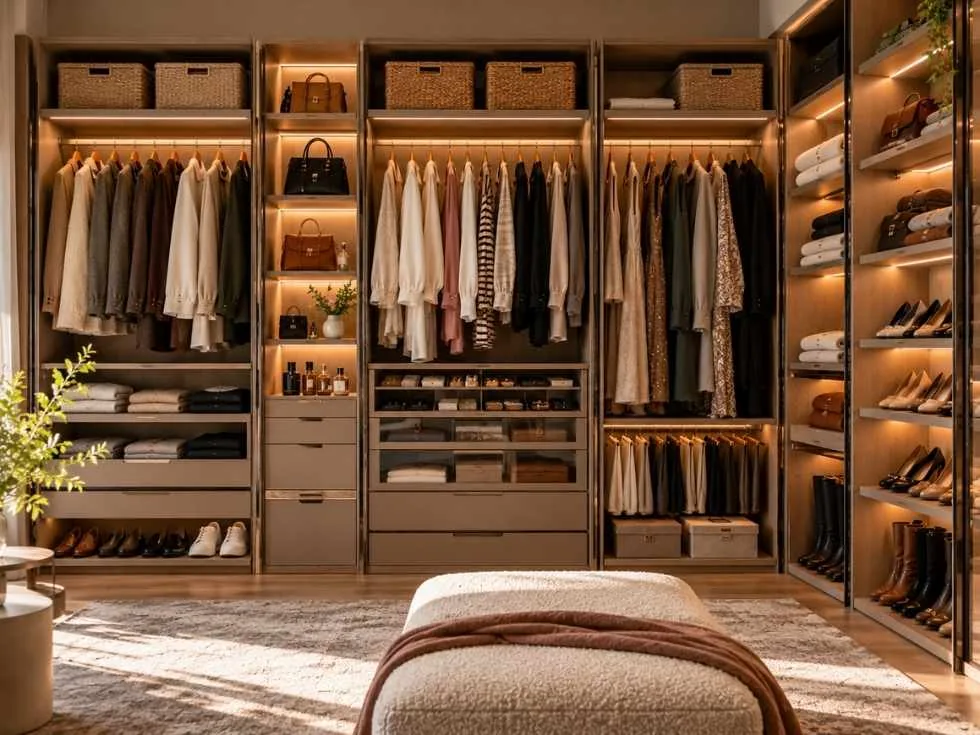
• Seasonal Clothing Storage Zone
Way up high! Use stylish woven baskets or fabric bins to keep these looking tidy.
• Accessories and Small Items Zone
Eye-level drawers mean you can pick the perfect watch without bending down.
• Footwear Storage Zone
Bottom racks keep the dirt away from your pristine clothes while putting your collection on display.
Planning Hanging, Folding and Drawer Space Effectively
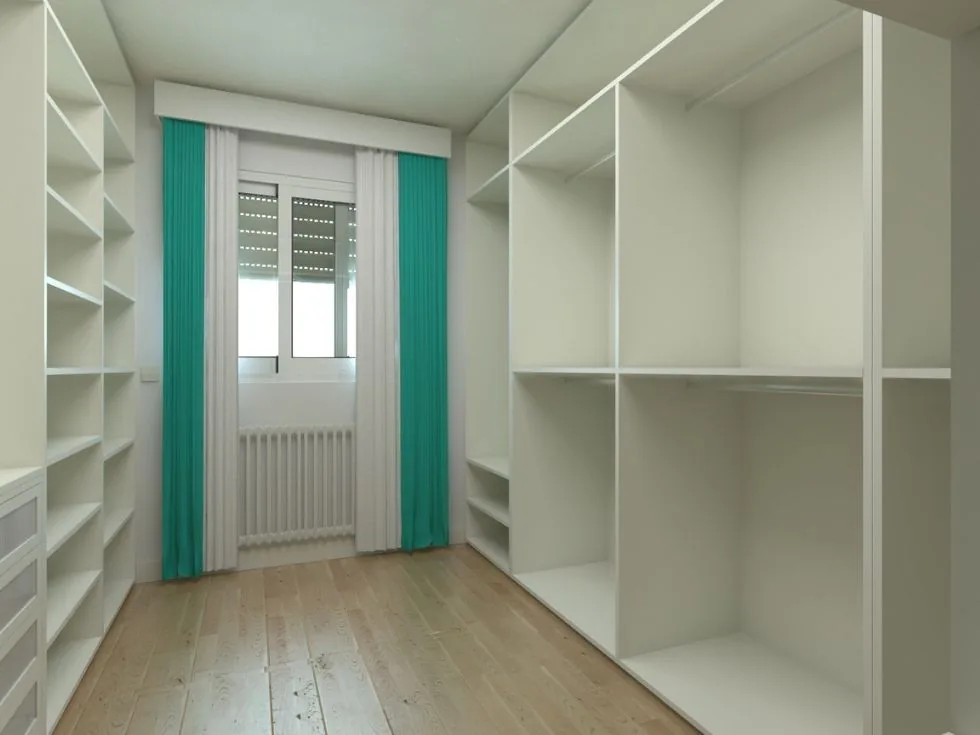
As a golden rule: hang the flowy fabrics (silk, linen, blouses) and fold the heavy knits (sweaters, denim). When reviewing top wardrobe designs, ensure you have roughly a 60/40 split between hanging space and shelving.
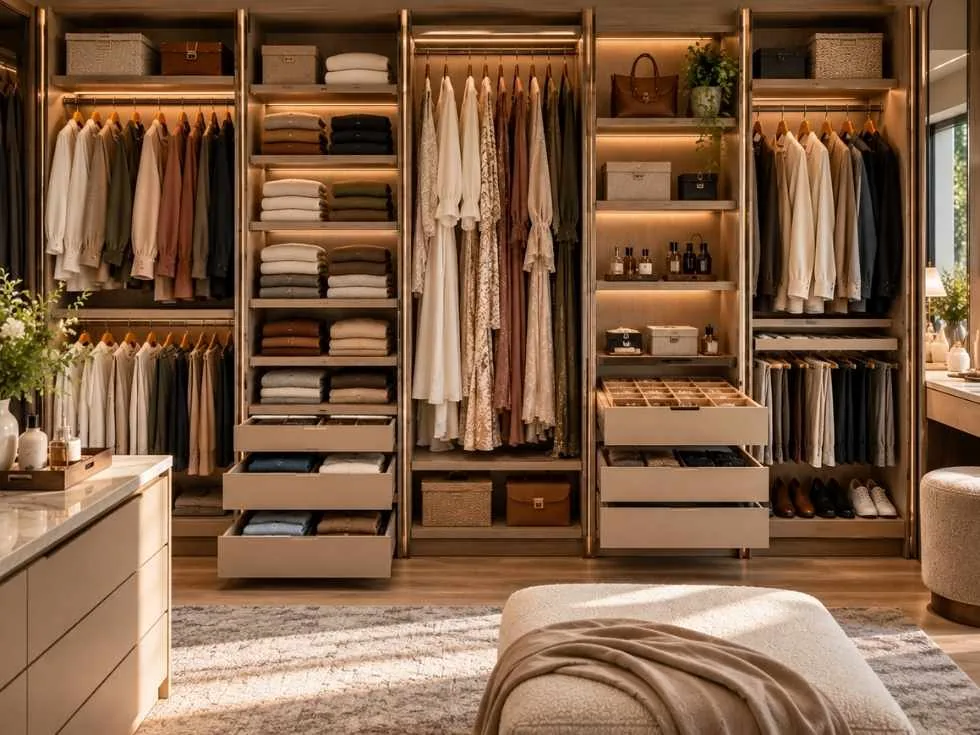
Wardrobe Lighting for Better Accessibility
• Benefits of Integrated Wardrobe Lighting
Because fumbling in the dark to find a black sock versus a navy blue sock is so last season. Here is why upgrading your space with built-in illumination is an absolute game-changer:
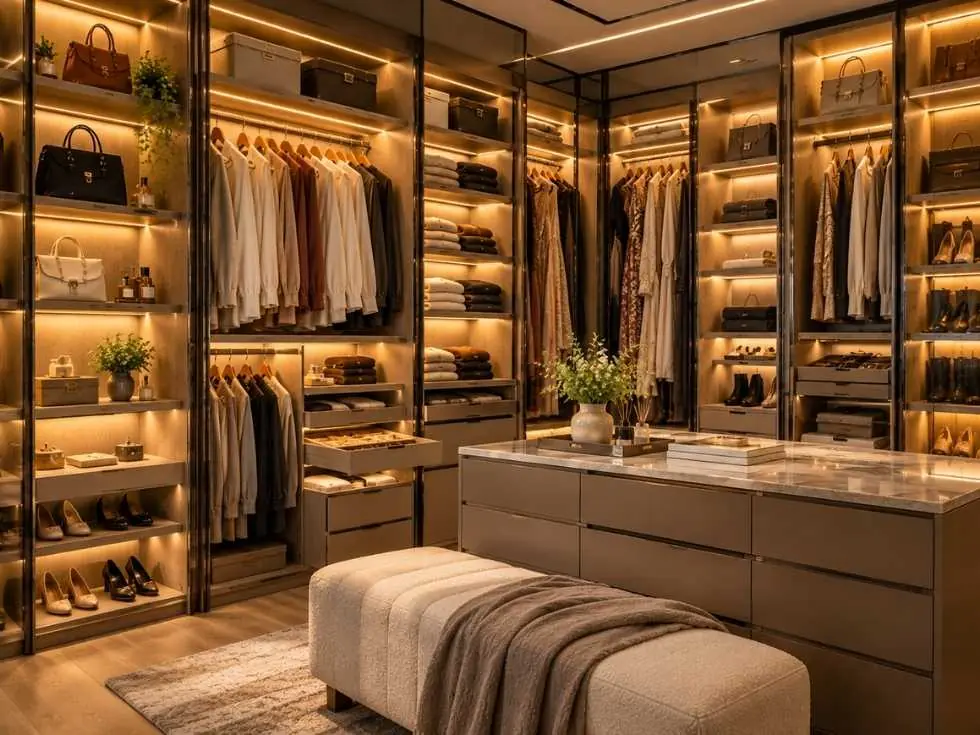
- Zero Colour Confusion: See the true shades of your garments instantly, ensuring you never accidentally pair a black sock with a navy one.
- Boutique Ambiance: Transforms your everyday closet into a high-end luxury retail display, making routine clothing choices feel like a VIP styling session.
- Effortless Visibility: Eliminates dark corners and shadows, allowing you to easily spot items tucked away in the back or lower shelves.
- Morning Zen: Saves you precious minutes during early-morning rushes by streamlining the search for your favorite accessories and outfits.
• LED Lighting Options for Wardrobes
Warm LED strip lights make any wardrobes design look like a high-end luxury boutique in Milan. Here are the top LED lighting choices to elevate your space:
- Under-Shelf LED Strips: Discreetly mounted beneath shelves to cast a soft, continuous glow over folded stacks and lower compartments.
- Recessed Closet Rod Lights: Integrated directly into the hanging rails for seamless, downward-facing illumination that highlights your hanging garments.
- Backlit Panel Lighting: Soft ambient glow panels placed against the back wall to create dramatic contrast and depth behind your clothes.
- Puck and Accent Lights: Directional mini spotlights perfect for highlighting designated accessory shelves, shoe displays, or handbags.
• Sensor-Based Lighting Solutions
Open the door, and let there be light! This touchless tech is the hallmark of a truly modern wardrobe design. Here are the key advantages of adopting sensor-driven illumination:
- Instant Hands-Free Activation: Lights snap on the exact second your cabinet or sliding doors glide open, giving you immediate clarity without fumbling for switches.
- Total Energy Efficiency: Zero electricity is wasted. The intelligent sensors ensure lights only turn on when the wardrobe is active and power down instantly when closed.
- Seamless Minimalist Aesthetics: No clumsy external switches or messy wiring cluttering up your clean lines. The technology stays completely hidden, maintaining a sleek finish.
- Smart Compartment Coverage: Magnetic or motion-activated sensors can even be embedded inside individual drawers, making sure deep-set storage spaces never stay in the dark.
• Improving Visibility in Deep Storage Areas
Use battery-operated or hardwired puck lights for the rescue in those notoriously dark corners. Here is how you can banish shadows from the deepest recesses of your closet:
- Wireless Convenience: Battery-operated stick-on puck lights let you add bright illumination anywhere instantly without dealing with messy wiring or electrical remodeling.
- Targeted Spotlighting: Compact puck lights can be angled precisely into deep shelves, dark top cubbies, or awkward corners where ambient closet light cannot reach.
- Reliable Backup Power: Many modern battery-operated options feature rechargeable USB designs or motion activation, ensuring your deep storage stays lit with zero hassle.
- Hardwired Permanence: For a seamless, maintenance-free setup, hardwired mini spotlights provide powerful, continuous brightness to deep cabinets and overhead bins.
Planning for Future Storage Needs
Your style will evolve, and your closet should too. The smartest wardrobe designs feature adjustable shelves and modular components that grow right along with your shopping habits! Here is how to future-proof your storage layout:
- Modular Magic: Invest in movable partitions and interchangeable components so you can easily swap out shelves for extra hanging space later.
- Flexible Shelf Tracks: Use slotted wall panels or adjustable peg systems to alter shelf heights whenever your collection shifts from short shirts to long winter coats.
- Scalable Accessory Inserts: Opt for modular drawer organizers that can be rearranged or expanded as your watch, belt, or jewelry collections grow.
- Leave Breathing Room: Intentionally build a little empty capacity into your initial layout, ensuring you have space for future impulse buys without causing a clutter crisis.
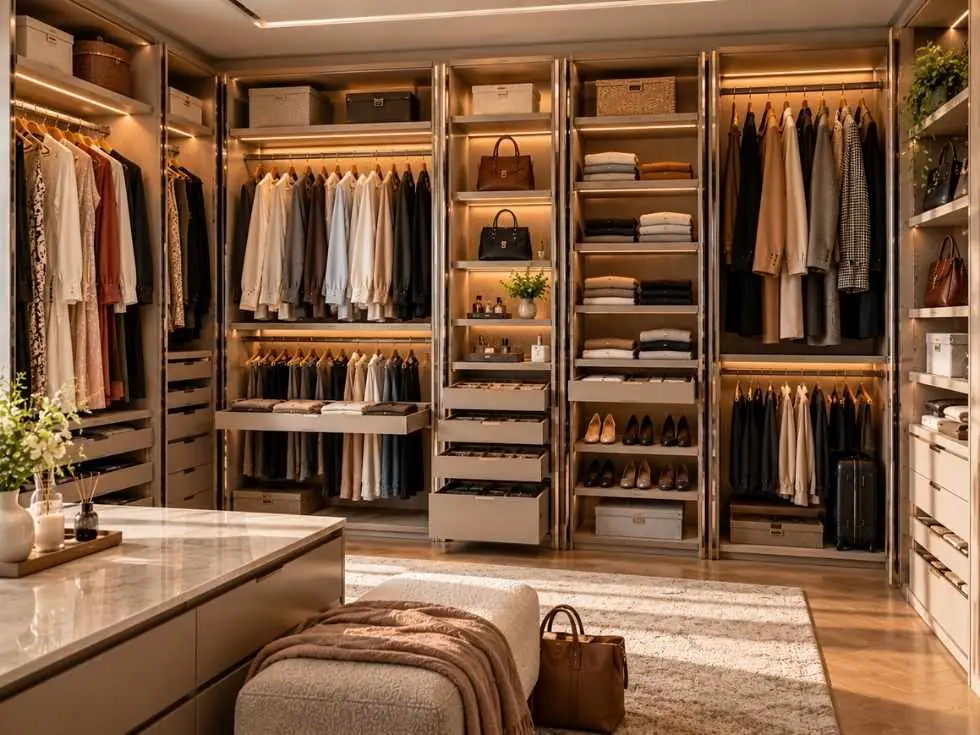
Common Wardrobe Planning Mistakes
Don’t fall for the trap of opting for a beautiful but entirely impractical bedroom wardrobe design. Forgetting to measure shoe height, ignoring lighting, or lacking drawer space will ruin the vibe. Even the most stunning cupboard design fails if the internal depth isn’t enough to hold a standard hanger! Here are the major pitfalls to avoid:
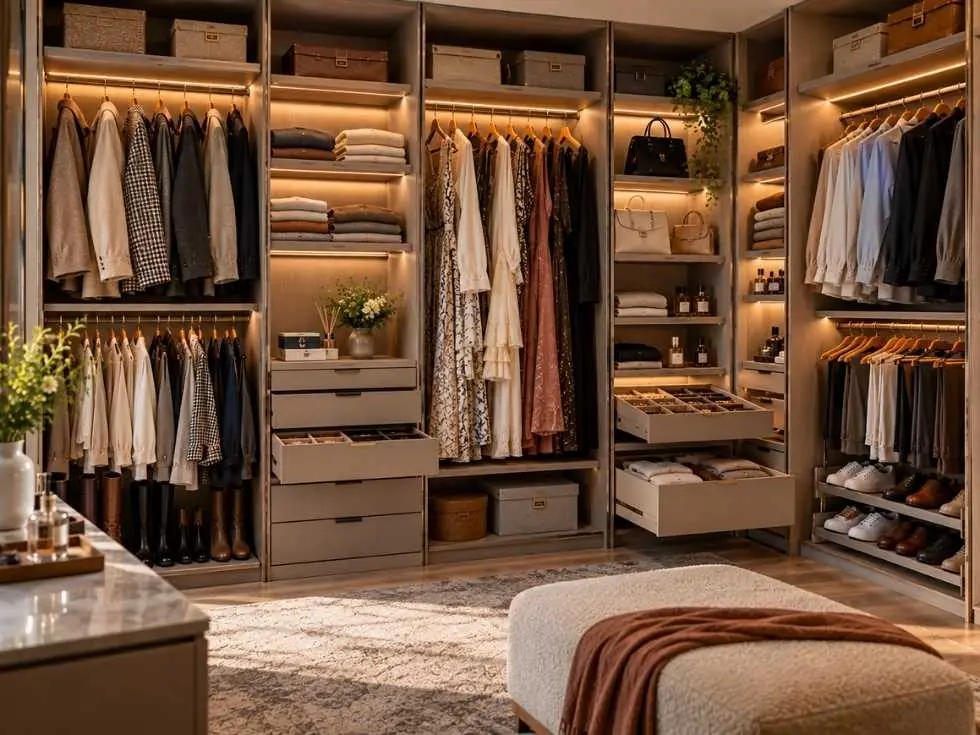
- Ignoring Standard Hanger Depth: Building your closet too shallow means coats and jackets get jammed against the doors, leaving them permanently creased.
- Neglecting Vertical Clearance: Forgetting to measure tall boots or stackable storage boxes leaves you with awkward dead space that wastes valuable room.
- Skipping Essential Drawer Space: Relying exclusively on open shelving leads to clutter; you need hidden drawers to tuck away smaller accessories seamlessly.
- Overlooking Task Lighting: Designing a gorgeous layout without proper illumination leaves your deepest corners in total darkness, making it impossible to find matching items.
Take the Next Step for Your Home!
Ready to turn your morning routine into a breeze with a wardrobe built around your lifestyle? Head over to your nearest Beautiful Homes store to explore the latest trends in modular wardrobes and customise a design that perfectly fits your space and daily habits!
Frequently Asked Questions
1. How do I plan a wardrobe based on my daily routine?
Track what you wear most often for a week. Place those daily VIP items at eye level and waist height for effortless grabbing during your morning rush.
2. How much hanging space should a wardrobe have?
Aim for at least 50-60% hanging space in most wardrobe designs. Dedicate sections for short hangs (shirts) and long hangs (dresses/coats).
3. What is the ideal mix of shelves, drawers and hanging sections?
A premium wardrobes design usually rocks a 50% hang, 30% shelves, and 20% drawers ratio, but tweak this if you heavily favor folding knits!
4. How do I organise a wardrobe efficiently?
Group items by category (work, gym, casual), then color-coordinate. Use velvet hangers for a uniform look and slim down bulk.
5. Which wardrobe layout works best for couples?
A split symmetrical layout is best. It offers defined boundaries for both individuals while maintaining a cohesive exterior aesthetic.
6. How can I maximise storage in a wardrobe?
Utilize vertical space! Add pull-down hanging rods, slim velvet hangers, and use the uppermost shelves for out-of-season items.
7. What are the most useful wardrobe accessories?
Pull-out tie racks, velvet jewelry trays, and slanted shoe shelves. A vintage almirah design can even be fitted with these modern pull-outs!
8. How do I future-proof my wardrobe design?
Use adjustable shelving and modular units. If your shoe collection suddenly doubles, you can easily shift shelves to accommodate the new additions!